
Real Estate Investing in Toronto: What Investors Need to Know Before Buying
Monday Oct 12th, 2026
Is Toronto real estate still a smart investment, or are rising costs making it harder to turn a property into a profit? For first-time landlords, experienced investors, and overseas buyers, answering that question starts with understanding the numbers before making an offer.
Toronto offers a wide range of properties and investment opportunities, but purchase prices are only part of the equation. Financing, taxes, maintenance, vacancy, and rental income can all affect your cash flow and long-term returns.
This guide breaks down real estate investing in Toronto, including how to get started, which property types and areas to consider, and how much cash you may need before buying. Whether you want rental income, long-term appreciation, or portfolio growth, careful preparation can help you invest with greater confidence.
Is Toronto a Good Place to Invest in Real Estate?
Toronto can be a good place to invest, especially for patient investors who run the numbers carefully. It is a large, active market with many property options. TRREB notes that continued immigration supports rental demand, with many newcomer households renting before transitioning to homeownership. TRREB reported an average GTA selling price of $993,410 in August 2026, down 2.7% from a year earlier.
For anyone weighing Toronto real estate investment, lower prices mean a gentler entry point. Condo apartments have fallen further, with the year-to-date average at $627,735. Rents tell a more cautious story. The average GTA one-bedroom condo rent was $2,273 in Q2 2026, and TRREB expects conditions to favour renters in the near term. That balance pushes careful investors to focus on income quality, not just price growth.
It is a weaker fit for anyone counting on fast price jumps or large monthly profits. Always test the numbers before you commit.
Getting Started: Budget, Financing, and Your First Offer
Your budget comes first. Start with the purchase price and your down payment. Then add closing costs, legal fees, and land transfer tax. So, how much money do you need to invest in Toronto real estate? There is no single number, because it depends on the property, your mortgage, and your costs. Plan for the extra costs early, not at the offer stage.
A reserve for vacancies and repairs protects you when plans change. Strong real estate investing in Toronto depends on conservative planning. If the property only works under perfect conditions, it is probably not the right one.
Once your budget is clear, many buyers ask: how do you start investing in real estate in Toronto? Most follow these steps:
- Get mortgage pre-approval for a rental property.
- Set a target return and a monthly cash-flow limit.
- Shortlist areas and property types that match both.
- Ask an agent to screen listings and review condo documents.
- Have a real estate lawyer review every agreement before you sign.
Investment Property Types Worth Comparing
Price is the first filter. TRREB's year-to-date 2026 figures put the average GTA condo at $627,735 and the average townhouse at $831,569. Semi-detached homes average $1,009,619, and detached homes average $1,332,194. What types of investment properties are available in Toronto? Most investment properties in Toronto fall into several common categories including condos, townhouses, semi-detached and detached homes, multi-unit buildings, and pre-construction units.
Lower prices do not always mean better returns, though. Condos can carry monthly fees, and houses place upkeep on the owner. Always compare the full cost of ownership, not only the purchase price. Multi-unit buildings and pre-construction units vary widely by project, so each one needs its own review.
International Realty Firm also offers a pre-construction section on its website for buyers exploring that route. Careful real estate investing in Toronto means matching the property type to your cash, risk tolerance, and time horizon.
The table below compares average GTA prices by property type. The figures come from the year-to-date 2026 data in TRREB's Market Watch report for August 2026, published by the Toronto Regional Real Estate Board. The townhouse figure combines freehold and condo townhouses, while multi-unit and pre-construction prices vary too widely by property to show a single average.
|
|
|
|
|
|
|
|
|
|
|
|
|
|
|
|
|
|
|
|
|
|
|
|
|
|
|
|
Source: TRREB Market Watch, August 2026 (year-to-date figures). Prices may vary by location, property type, condition, and market conditions. Figures are for general information only and should be verified before making an investment decision.

What Are the Best Neighbourhoods in Toronto for Real Estate Investment?
A good area usually offers steady tenant demand, easy access to transit, and nearby shopping, parks, and schools. Those traits help a property rent quickly and hold interest over time. Each area has its own price range, housing mix, and rental demand. That is why the best neighbourhoods to invest in Toronto are not the same for every buyer.
Successful rental investing depends on steady demand rather than on trendy addresses. Compare each area on rent levels, vacancy, price per square foot, and upcoming supply before you buy. Local knowledge also matters, because conditions can differ from one block to the next. Buyers should also check transit access, nearby employers, and the supply of similar rentals.
A quiet street near good transit can perform differently from a busier one with weaker connections. International Realty Firm has dedicated community pages for eight Toronto neighbourhoods, so you can start your research there:
- Bayview Village
- Bayview Woods-Steeles
- Don Valley Village
- Henry Farm
- Hillcrest Village
- Pleasant View
- Newtonbrook East
- Willowdale East
You can also compare other parts of the city, such as downtown or Scarborough, before you decide.
Rental Income vs. Carrying Costs: A Quick Reality Check
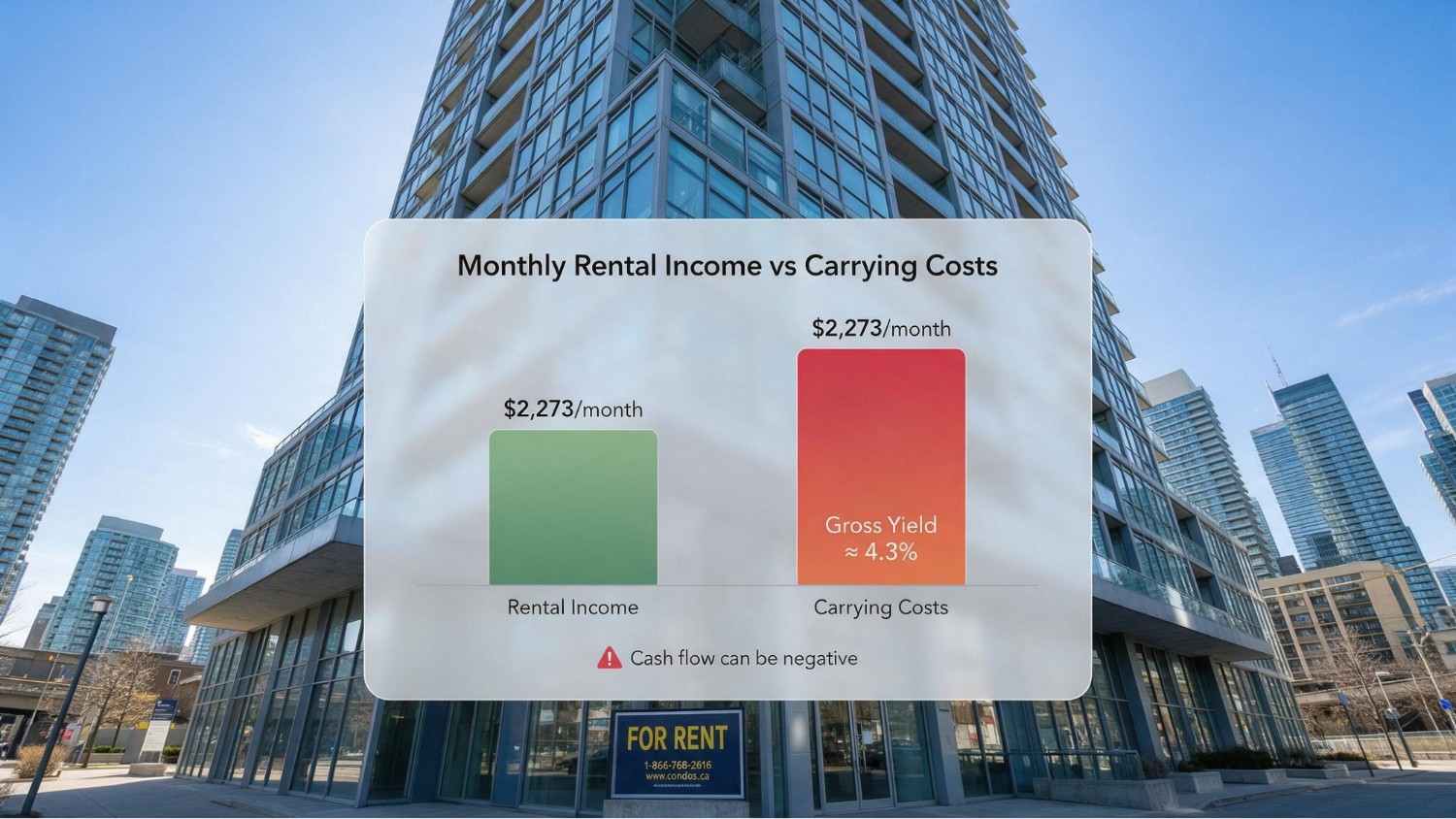
Rent and price tell you whether a deal can work. Consider a simple example using TRREB figures. The average GTA condo apartment sold for $634,972 in Q2 2026, and the average one-bedroom condo rented for $2,273 a month. That is about $27,276 in yearly rent, or a gross yield near 4.3%. Any Toronto rental property investment should pass this kind of simple test before you make an offer.
This is a rough comparison, because a one-bedroom often costs less than the all-condo average, but it shows the pattern. Gross yield ignores property tax, condo fees, insurance, vacancy, and mortgage interest. After those costs, a rental can easily break even or run a small monthly shortfall, especially with a large mortgage.
Some investors accept thin cash flow in exchange for long-term appreciation and mortgage paydown. Appreciation is never guaranteed, so avoid relying on it alone. Make that choice on purpose, and test it with a mortgage calculator first.
Turning Your Research Into a Confident First Purchase
Home prices and one-bedroom condo rents are below last year’s levels, so careful comparison matters more than ever. Those conditions favour people with clear goals and enough cash to ride out slow months. Patience, not speed, usually decides which investors earn steady long-term returns.
Start by setting a budget, then compare property types and neighbourhoods against your target return. In the end, real estate investing in Toronto rewards investors who plan carefully and stay realistic. Use current market data from sources such as TRREB, and test every property against a conservative cash-flow scenario. Remember that fees, taxes, and financing rules can change, so confirm details with a mortgage professional and a lawyer before you act.
Your first purchase does not need to be perfect, but it should be well researched. Anyone learning how to invest in Toronto real estate should also test the numbers with International Realty Firm's Mortgage Calculator and Land Transfer Tax Calculator. The Mortgage Affordability calculator shows what you can comfortably borrow. Your budget should also leave room for changes in mortgage payments at renewal.
Frequently Asked Questions
Can international buyers get help with Toronto investment property?
International Realty Firm has a Referrals & International Clients page on its website. Contact the team to discuss your situation, and speak with a lawyer about any rules that apply to non-residents.
Is a condo or a house better for a first investment?
Condos have a lower average price than houses, but condo fees and high rental supply can affect returns. Houses cost more, and the owner handles upkeep. The better choice depends on your cash, risk tolerance, and how hands-on you want to be.
Is pre-construction a good option for investors?
It can suit some investors, but closing happens later and values may change by then. Review the agreement carefully with a lawyer, and explore the International Realty Firm's Pre-Construction section to learn more.
What ongoing costs should rental investors expect?
Expect property tax, insurance, condo fees if applicable, maintenance, mortgage interest, and occasional vacancy. Build these into your cash-flow estimate before buying, and keep a reserve for repairs and slower rental months


Post a comment